What This Is
An objective measurement of how your body is actually built and how it actually moves. You stand in front of the unit, move naturally for about a minute, and the system returns a 3D skeletal and muscle map of you.
Every recovery studio in this city will tell you your hips are tight. We will show you which side, by how much, and which muscles are compensating for it. That is the whole difference. One is an opinion formed by looking at you. The other is a measurement.
Honestly, this is the part that is hard to explain in writing. People understand it the moment they see their own scan come up on the screen. You have to come try it.
Who This Is For
- Anyone who has been told to "stretch more" without being told what, or why
- Lifters who suspect a side-to-side imbalance but cannot prove it
- Runners chasing one-sided pain through the hip, knee, or calf
- Athletes coming back from injury who need a baseline to train against
- People who have paid for bodywork for years and never seen a number
- Anyone curious enough to want to see themselves in 3D
How The Scan Works
Three steps, and the whole thing fits inside the front end of a normal session.
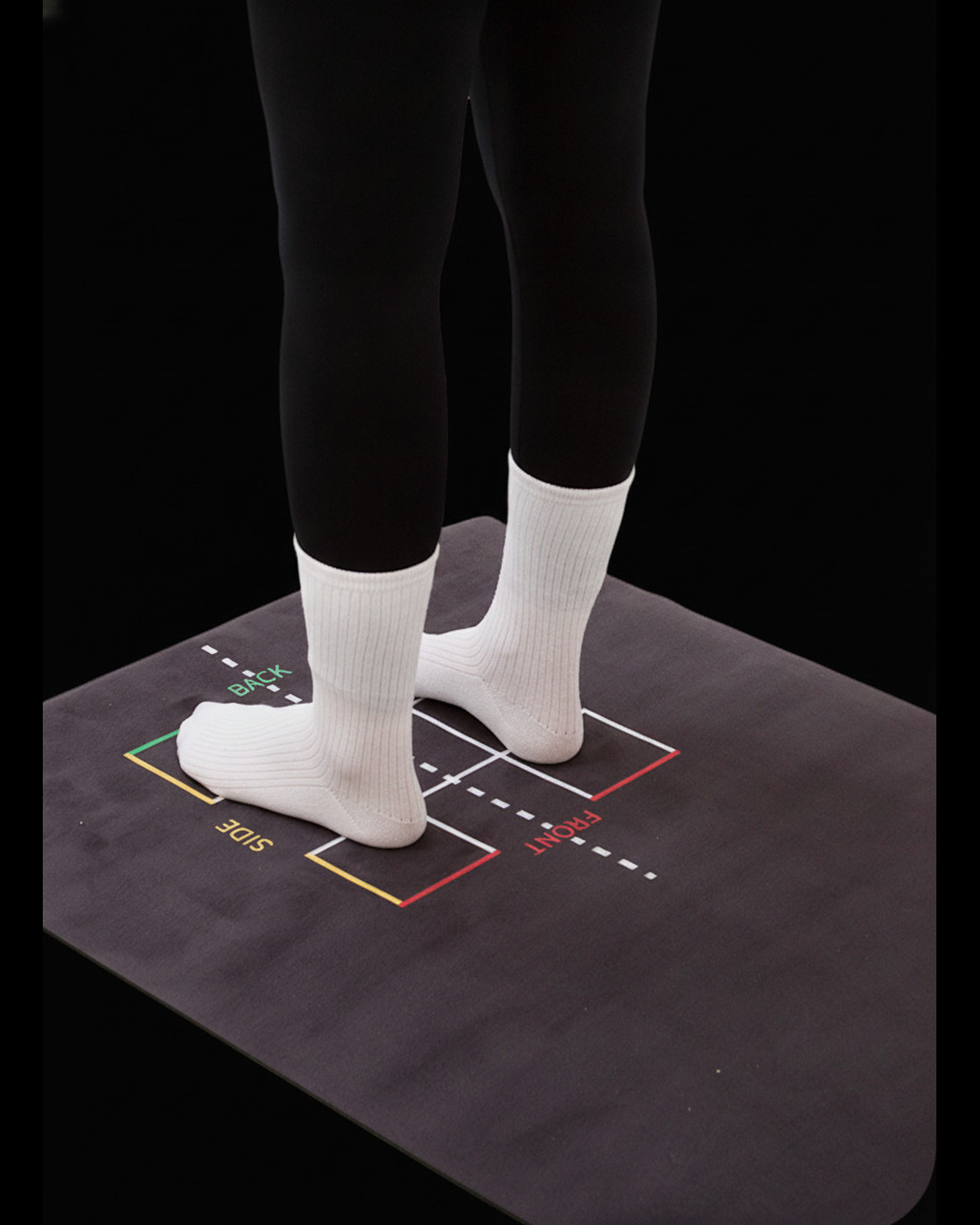
Stand and move. You step in front of the unit fully clothed. Depth cameras read your body in three dimensions while you hold posture and move through a few natural positions. It takes about 60 seconds. Nothing is strapped to you and nothing touches you.
The model builds. The system assembles a 3D skeletal and muscle model accurate to within millimeters, then evaluates 87 muscles for tightness and weakness using Janda's concepts and Anatomy Trains as its framework. Your report is ready in under five minutes.
We read it together. Your operator walks you through what the scan found, what it means for the way you train, and what we are going to do about it in the session you are already in.
What You'll Leave With
- A 3D map of your own skeletal alignment and muscle balance
- The specific muscles reading tight and the specific ones reading weak
- A protocol built from those findings, not from a template
- A stored baseline, so your next scan shows the change side by side
- A much clearer answer to why the same thing keeps hurting
What The Report Looks Like
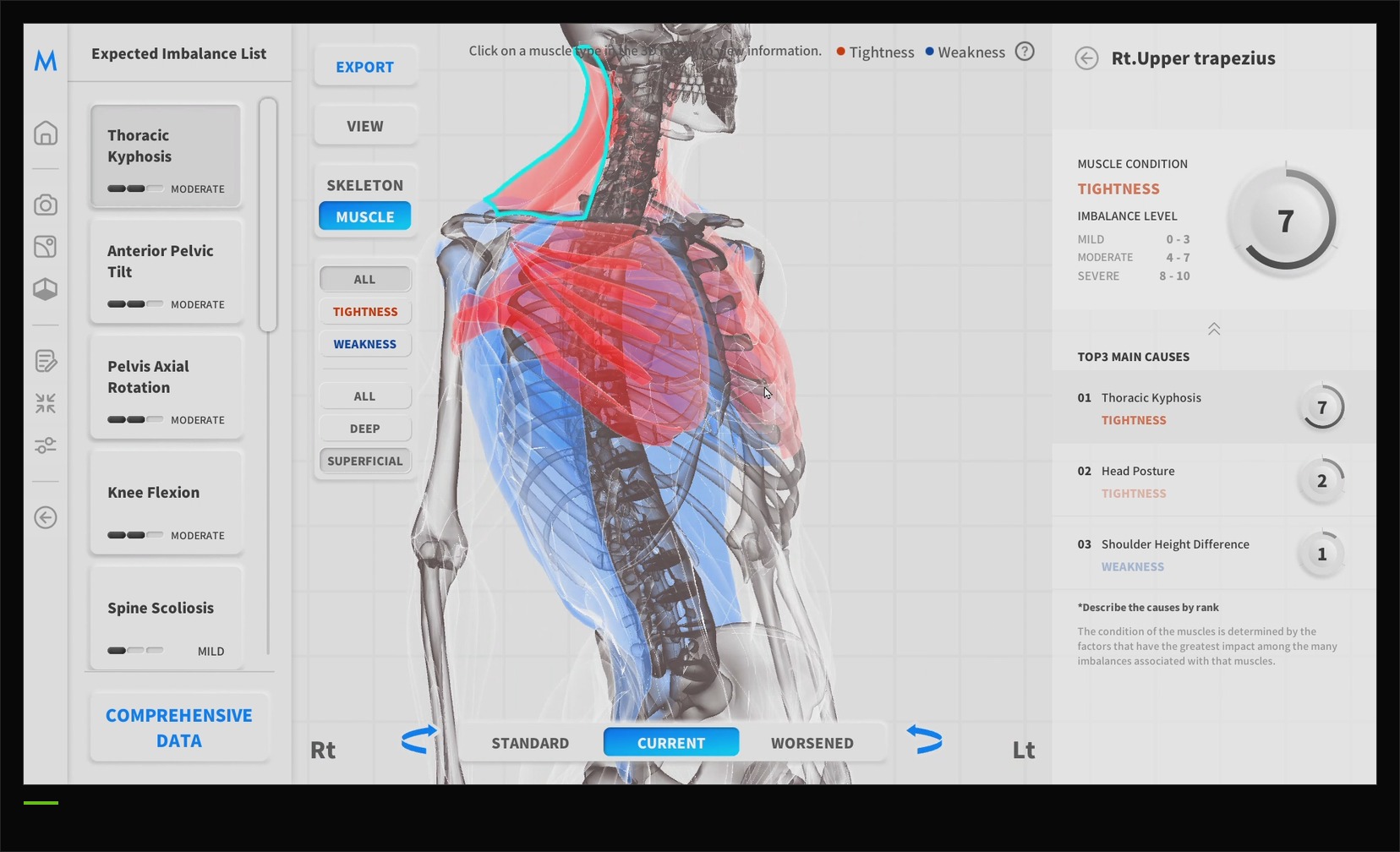
This is the actual output, not a mock-up. Every muscle reading tight shows red, every muscle reading weak shows blue, and each finding is ranked by severity with the causes listed underneath.
Every Plan Starts Here
The scan is not a bolt-on. It is the front door to everything else in the studio.
Your scan sets the target. If the data says your left glute is underfiring and your right QL is doing its job for it, that is where the deep tissue work goes, that is where the biomechanics correctives point, and that is what the EMS session is programmed around. The modality does not change. The aim does.
Then we measure again. Because the baseline is stored, the follow-up scan is a direct visual comparison. You do not have to take our word for whether the work is landing. You can see whether the asymmetry closed.
That is what separates a recovery plan from a recovery appointment. See the full method.
Booking
The MOTI 3D body scan is $100, by appointment in Miami, one on one with your operator. Book a session and ask for the scan, or call the studio and we will walk you through it first.
If you have never seen your own body measured like this, that is the reason to come in. Reading about it does not do it justice.
Frequently Asked
Come See Your Own Scan
Sixty seconds in front of the cameras and you will know more about how your body is loaded than years of being told to stretch. Book a session in Miami and try it.